
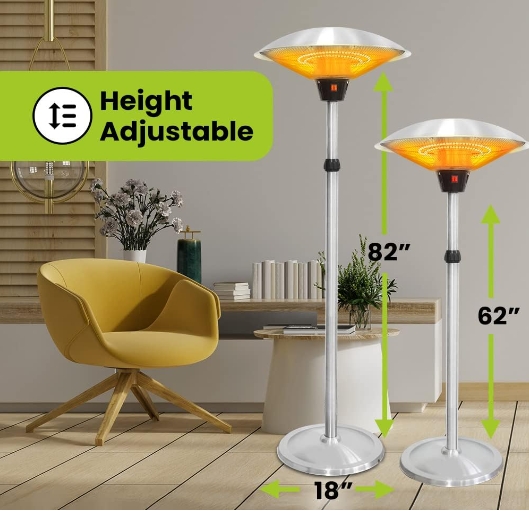
Why Your IP44 Infrared Heaters Actually Fail (and How to Fix It)
Here is a little secret: most IP44 infrared heaters don’t die because the heating element gave out. It almost always happens at the lead-wire junction. When you’re pushing high wattage, the heat doesn’t just go where it’s supposed to. It creeps backward, traveling right up the wire. This basically bakes the insulation until it cracks. Once that happens, you’re looking at a short circuit.
The problem with “standard” builds
A lot of cheap setups just use some shrink-wrap or basic potting and call it a day. But at high temps, those materials just fall apart. They get brittle. They crack. And since these are IP44 rated, you’ve got splashing water hitting those compromised joints. It’s a recipe for disaster. We see this all the time in low-end designs where the sealing was an afterthought, not part of the actual chassis plan.
Doing it the right way
To stop that high-temp aging, we do things a bit differently. We use a multi-stage process with high-temp silicone gaskets and a specific kind of epoxy potting. The trick is that the epoxy expands and contracts at the same rate as the quartz tube and the copper lead. That way, the seal doesn’t just pull away and leave a gap when things get hot. We also make sure the jump from the heating element to the cable is completely airtight. By throwing in ceramic insulators and heat-resistant sleeves, we basically push the heat away from the connection. Your wire jacket stays cool, and it doesn’t burn out.
A few things to keep in mind
Now, there is a trade-off. Proper IP44 sealing adds some bulk. You can’t just slide a sealed unit into a housing that was built for bare wires. You’ll need a bit of extra breathing room for the gaskets and potting compound. If you cram it into a space that’s too tight, you’ll actually trap the heat around the seal. That defeats the whole purpose of using high-temp materials in the first place. Give it some air, use a dedicated heat sink, and your seals will actually last.