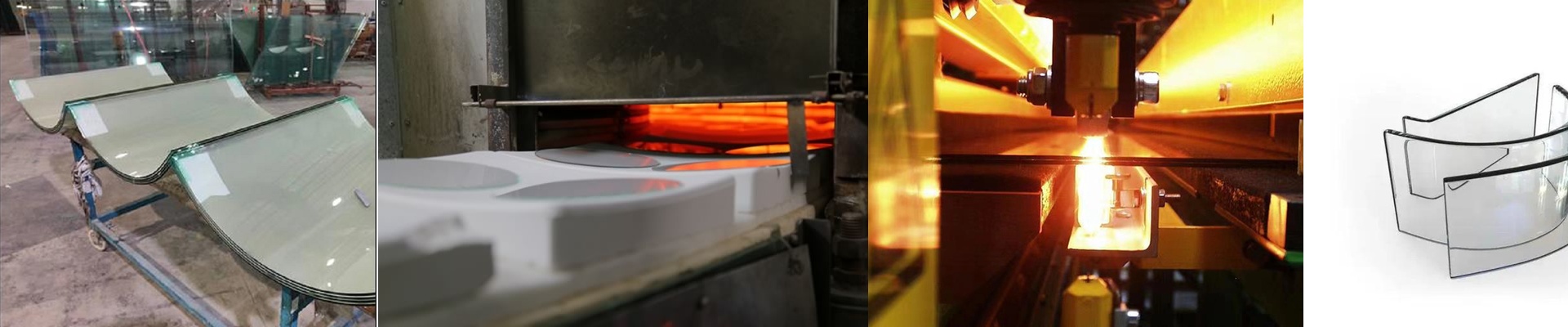
On the line, heat isn’t just temperature—it’s control. When you anneal glass with infrared lamps, you’re steering thermal gradients that decide whether the sheet makes the cut or gets scrapped. In bending, a thermal field that’s off even a little leaves you with optical distortion and spring-back. In tempering, uneven preheat builds stress concentrations and invites spontaneous breakage. In lamination, slow or patchy heating traps air, drives delamination, and drags out the cycle. And in coating drying, too much convection or too little radiant control shows up as orange peel and poor adhesion.
What matters, technically
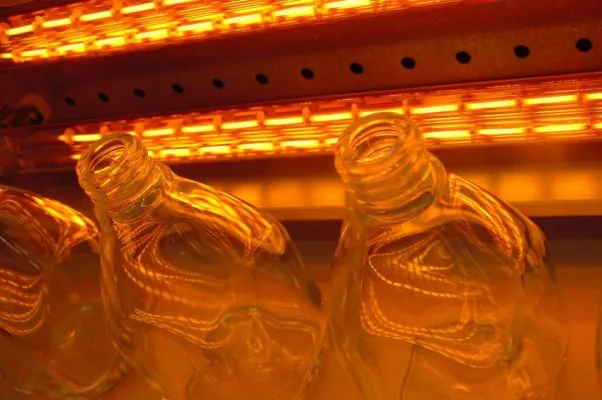
Infrared annealing comes down to matching the heater spectrum to the glass emissivity and the time window you actually have. Quartz short-wave lamps give you rapid, high-flux response for fast thermal ramps; medium-wave and carbon fiber elements lay down a broader, more uniform profile for thicker glass and longer soaks. We tune the emitters so power density stays repeatable across the glass width. The profile is set by optics and control—not by hot spots and cold edges. Output is dialed in kW/m², matched to your line speed and glass thickness, and the control system holds setpoint stability within tight tolerances.
Why it works where we use it
In hot bending, infrared annealing gives you a tight, localized heat zone that cuts down edge cooling and keeps optical defects off the table. For tempering preheat, the lamps shorten soak time and improve temperature uniformity—so the quench is more consistent and breakage risk drops. In EVA/SGP/PVB lamination, the same approach speeds up the heating phase while keeping film flow even, which shortens the whole cure cycle. For coating drying, infrared hits the coating surface directly, reducing solvent entrapment and improving surface quality without overheating the substrate. The payoff is higher first-pass yield, fewer reworks, and output you can plan around.
The things you learn the hard way
Infrared lamps are picky about spacing, reflector geometry, and ambient conditions. When glass thickness or emissivity changes, you have to re-verify the heating profile. Set up for clean power, proper cooling, and safe access for maintenance. Lamp life takes a hit under repeated thermal shock, so treat warm-up and cool-down as controlled ramps. When it’s matched to your line and maintained on schedule, infrared annealing delivers stable heat with less energy than full-convection ovens—and a faster response than traditional resistive panels.