

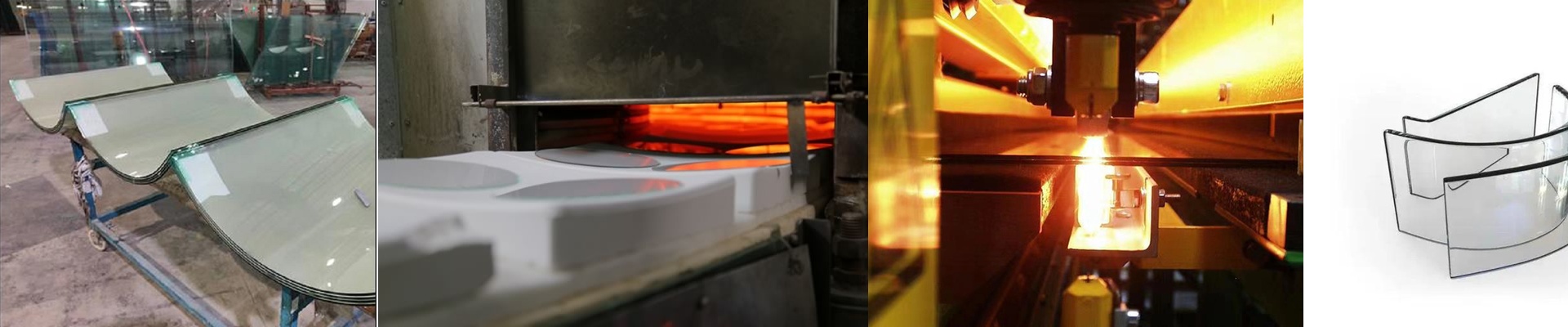
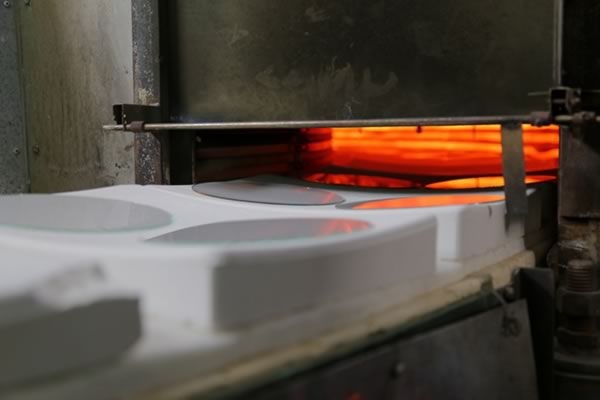
On the insulating glass line, the sealant has to cure fast and evenly—otherwise, you’re staring at rejects. Miss the right heat profile, and you’ll see bubbles, weak adhesion, or worse: thermal stress cracks in the glass itself. The line stalls. Scrap piles up. And everyone’s eyes land on the heating step. We built the glass sealant drying infrared lamp to hit that step where it matters: the moment the sealant transitions from wet to fully set, without cooking the glass. This isn’t a general-purpose heater. It’s a production tool tuned for glass processing, where temperature uniformity and repeatability translate straight into yield.
What matters technically
This lamp runs on short-wave infrared (IR) emitters—halogen or quartz elements—because glass and sealant respond to short-wave energy with rapid, surface-dominant heating. That’s exactly what you need when the sealant has to crosslink quickly while the glass stays dimensionally stable. The specs are chosen around real line constraints:
- Power and density: Industrial units are sized to line speed and sealant thickness, delivering the energy density needed to drive off solvents and kick off cure without soaking the edge.
- Voltage and integration: Available in standard industrial voltages, with connector options that plug into existing sealing machines and drying stations. No custom panel work.
- Emitter life and stability: We design for long emitter life under continuous cycling, because downtime on the line is measured in dollars per minute.
- Controllability: The system works with closed-loop control using temperature feedback. Set the profile once, and the lamp holds it. Short-wave IR gives you two practical wins in glass sealant drying. Response is fast—heat on, heat off—so the thermal transient stays under control. And the heat is directional. You put energy where it’s needed: along the bead path, not into the chamber air.
Why it works here
On an insulating glass line, the sealant has to cure within the cycle time without compromising the glass. If the heating is uneven, the bead cures inconsistently—some sections stay tacky, others overcure. That leads to adhesion failure, edge defects, and seal integrity issues that show up later as fogging or gas loss. Our infrared lamp lays down a uniform thermal field across the sealant bead, which cuts down variability in cure state from one corner to the next. The payoff is fewer rejects and more consistent seal strength. You also pick up speed. Infrared heating targets the sealant directly, so you hit the required cure temperature faster than convection. That shortens the dwell window and lets you increase throughput without adding floor space. Energy use drops because the energy goes into the product, not the air. In a plant running multiple shifts, that difference shows up on the utility bill. We have units running 5,000+ hours with less than 5% output drop, which keeps maintenance predictable. And when it comes to integration, the lamp is designed as a drop-in module. It fits existing machine footprints and interfaces, so you can replace aging heaters without redesigning the line.
Things to know
Infrared heating is efficient, but it’s line-of-sight. If the sealant bead is shadowed by spacers or hardware, that area gets less energy. Plan lamp position and beam coverage so the entire bead is exposed. Glass emissivity and reflectivity vary by coating and tint. Low-e and reflective coatings can change how heat is absorbed, so the first run should include a quick thermal profile check with your glass stack. Finally, infrared lamps get hot—surface and reflector temperatures are high during operation. Clearances, guarding, and safe access have to be part of the installation. We provide the mounting and clearance data up front so safety and uptime don’t become trade-offs. If your goal is repeatable sealant drying with fewer rejects and predictable maintenance, specify the infrared lamp as part of the sealing step, not as an afterthought. Match the wavelength to the material, control the profile, and run the line the way it was meant to run.